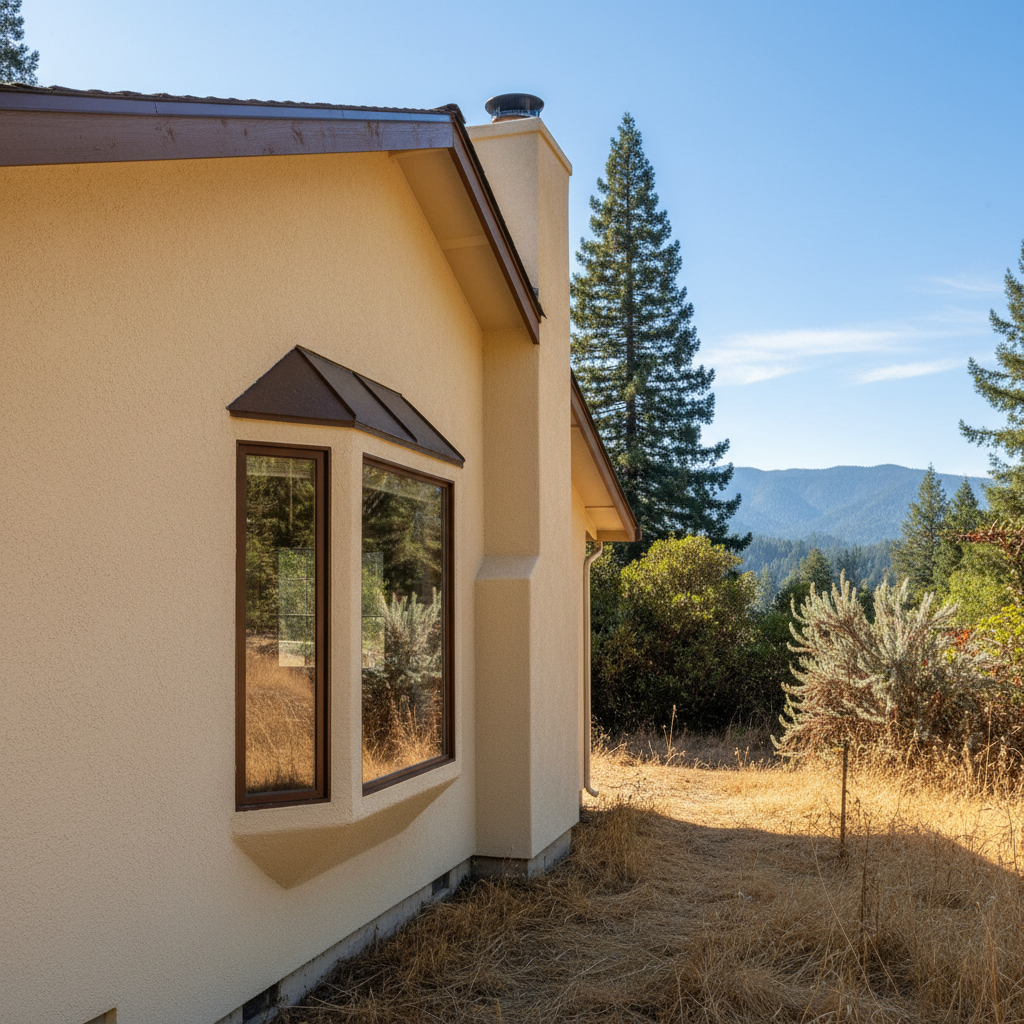
So, you're looking at stucco for your place, maybe a new build or re-siding an old one. It's a smart choice, especially around here with our damp winters and dry summers. But let's be real, the first thing on everyone's mind is always, "How much is this going to set me back?"
I've been doing this for years with Pacific Stucco Co, and I see a lot of folks get confused by quotes that seem all over the map. It's not as simple as a flat rate per square foot, though that's where most people start their thinking. There are a bunch of factors that push the price up or down. Let's dig into what actually affects stucco installation costs right here in Felton.
What Drives Stucco Installation Costs?
You'd think it's just the material, right? Nope. Labor, prep work, and the complexity of your home are huge. Here's the breakdown:
- Type of Stucco System: This is a big one. Traditional three-coat stucco is robust but labor-intensive. It involves a scratch coat, brown coat, and then the finish. Then you've got synthetic (EIFS), which is lighter and offers better insulation. And then there's one-coat stucco, which is often a cement-based product applied thicker than a single coat of traditional. Each has different material and labor requirements. Traditional is generally the most expensive due to labor, while one-coat can be a good middle ground.
- Condition of Existing Walls: If we're going over old siding, we might need to remove it first, which adds demo costs. If it's a new build or a clean surface, that's less work. Rotten wood, uneven surfaces, or lead paint issues? That's more prep work, more hours, and more money.
- Complexity of the Job: A simple, flat rectangular house is way cheaper to stucco than a Victorian with turrets, multiple bump-outs, and a dozen windows. Every corner, every arch, every window, and door opening adds time and requires more intricate flashing and detailing. High walls, multiple stories, or difficult access (like a steep hillside lot common around Felton Grove) mean scaffolding, extra safety measures, and more time.
- Material Quality & Finish: You can get basic white or gray stucco, or you can go for integral color, which costs more but means you don't have to paint later. There are also different textures – smooth, sand float, dash, worm finish – some are more labor-intensive to achieve than others. Higher-end additives for durability or specific colors will also bump up the material cost.
- Flashing and Waterproofing: This isn't optional, it's critical. Proper flashing around windows, doors, and rooflines prevents water intrusion, which is a major concern in our wet Felton winters. Cutting corners here will cost you big time down the road. Quality flashing materials and meticulous installation add to the cost, but they're non-negotiable for a long-lasting job.
- Waste Disposal: Tearing off old siding or dealing with stucco scraps? That debris has to go somewhere, and landfill fees aren't getting any cheaper.
Typical Stucco Cost Ranges in Felton, CA
Alright, let's talk numbers. Remember, these are rough estimates for Felton and the surrounding Santa Cruz Mountains area. Material and labor costs can fluctuate, but this should give you a solid ballpark.
For a standard, mid-range traditional three-coat stucco job on a moderately complex home, you're generally looking at $10 to $18 per square foot of wall surface. This includes materials, labor, and proper flashing.
- Smaller, simpler homes (under 1,500 sq ft): Might be on the higher end of that range, say $15-$20/sq ft, because smaller jobs have higher fixed costs.
- Larger, more complex homes (over 2,500 sq ft, multiple stories, lots of architectural details): Could push it to $18-$25+ per square foot. Those intricate details and scaffolding really add up.
- Synthetic (EIFS) or One-Coat Systems: These can sometimes be a bit less, perhaps $9-$16 per square foot, especially if insulation is a priority. They're quicker to install, which saves on labor.
- Repairs: Patching can range from a few hundred dollars for a small crack to several thousand for larger sections, depending on the damage and matching the existing finish.
So, for an average 2,000 square foot home in Felton with, let's say, 1,500 square feet of exterior wall surface to stucco, you could be looking at anywhere from $15,000 to $27,000 for a quality job. This isn't a cheap upgrade, but it's a durable, long-lasting one.
What Should Be in Your Stucco Quote?
Don't just look at the bottom line. A good quote from a reputable contractor like Pacific Stucco Co will be detailed. It should clearly outline:
- Scope of Work: What exactly are they doing? Is it a full tear-off and re-stucco? Going over existing siding? New construction?
- Stucco System Type: Traditional three-coat, one-coat, EIFS? Specify.
- Materials: Brand of stucco, type of lath, flashing materials, color, texture.
- Prep Work: What's included? Power washing, minor repairs to substrate, removal of existing materials.
- Flashing & Waterproofing: Specifics on how windows, doors, and rooflines will be sealed. This is huge.
- Waste Disposal: Who handles it, and is it included in the price?
- Timeline: Estimated start and completion dates.
- Payment Schedule: Typically a deposit, progress payments, and a final payment upon completion.
- Warranty: What's covered and for how long?
- Insurance & Licensing: Make sure they provide proof of both.
How to Avoid Overpaying (or Getting Scammed)
This is where my experience really comes in handy. I've seen it all.
- Get Multiple Quotes: Don't just go with the first guy. Get at least three detailed quotes. This helps you compare apples to apples and understand the market rate.
- Check References & Reviews: A good contractor will have a track record. Ask for local references, check online reviews.
- Verify Licensing & Insurance: This is non-negotiable. If they're not licensed and insured, you're taking a massive risk. In California, you can check contractor licenses online.
- Don't Go for the Cheapest Bid: Seriously, the lowest bid often means corners are being cut. Stucco is a long-term investment. A cheap job now will cost you far more in repairs down the line.
- Understand the Contract: Read every word. If something isn't clear, ask. Don't sign anything you don't fully understand.
- Avoid Large Upfront Payments: A reasonable deposit is fine (usually 10% or a fixed amount like $1,000, whichever is less, by California law for residential projects). Be wary of anyone asking for 50% or more upfront.
- Ask About Change Orders: What happens if unforeseen issues come up? How are changes to the scope of work handled and priced?
Stucco is a fantastic, durable exterior for your home, especially when done right. It'll protect your house for decades, look great, and even help with insulation. Just make sure you're working with someone who knows what they're doing and isn't trying to pull a fast one. Do your homework, ask the right questions, and you'll get a beautiful, long-lasting finish that's worth every penny.